


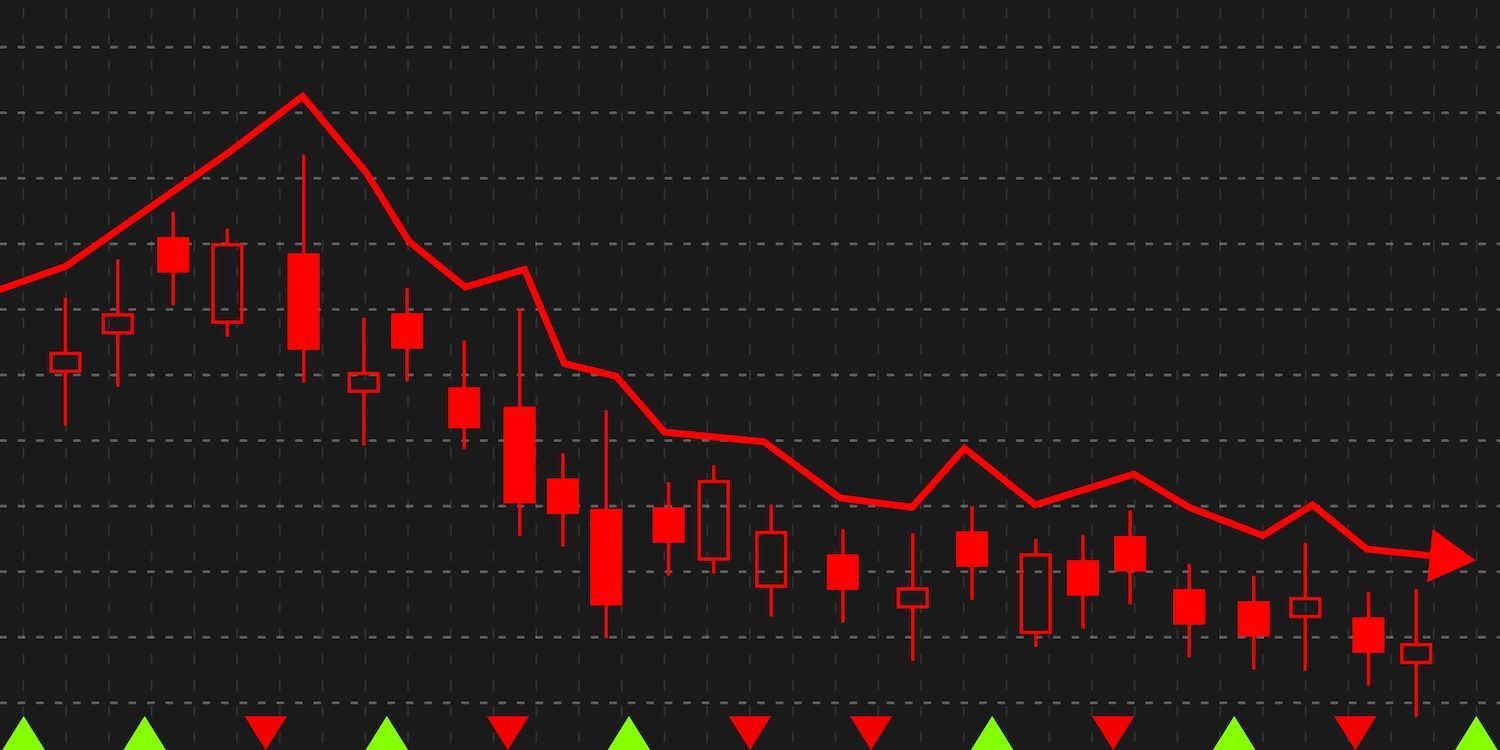
Zcash experienced a significant price correction, plunging 26% within a 24-hour period. The cryptocurrency dropped to approximately $485, a sharp decline from its recent peak above $700 earlier this month, which was its highest level since early 2018. This substantial correction has ignited discussions among traders and analysts regarding the future trajectory of the privacy-focused cryptocurrency. The central question is whether its recent rally has concluded or if this decline represents a temporary pullback before potentially resuming its upward trend.
Key Market Movements and Expert Opinions
The price drop saw Zcash fall from over $700 to around $485. This movement occurred within a broader context of declines in the privacy coin sector, with Monero experiencing a 9% loss and Dash declining by 16% during the same period.
Arthur Hayes, co-founder of BitMEX, had previously expressed a highly bullish outlook for Zcash, predicting that ZEC could reach $1,000 or even $10,000. His investment fund, Maelstrom, holds Zcash as its second-largest liquid position, trailing only Bitcoin.
Technical analysts hold differing views on Zcash's current trajectory. Some interpret the recent decline as a mid-trend correction, suggesting that the upward momentum may continue. Conversely, other analysts express caution, warning of potential further drops to support levels at $344 or even $235 if the current support fails to hold.
Market Reaction and Expert Analysis
The cryptocurrency community has offered mixed interpretations of the recent price action. Arthur Hayes, co-founder and former chief executive of BitMEX, raised questions about whether investors should consider exiting their positions following the recent decline.
Hayes had previously outlined optimistic price projections for ZEC in recent weeks. Just last week, he forecasted that the cryptocurrency would reach $1,000. He had also previously set a target of $10,000, although that figure appeared significantly disconnected from prevailing market conditions.
Maelstrom, an investment fund operated by Hayes, maintains significant exposure to Zcash.
The American entrepreneur disclosed recently that Zcash represents the entity's second-largest liquid holding, with Bitcoin being the only asset held in a larger quantity.
Analyst Degen Sing provided a different perspective on the price movement, characterizing it as a "textbook mid-trend pullback before continuation" rather than a definitive reversal. Degen Sing identified $750 as the next significant resistance level, noting that the price had already tested this threshold. The analyst suggested that a rise in Bitcoin to $110,000 would be a catalyst for ZEC to surpass that resistance level.
Broader Privacy Coin Decline
The correction observed in Zcash's price is reflective of a wider downturn affecting privacy-focused cryptocurrencies. Monero was trading at approximately $380, indicating a 9% decrease over the preceding 24 hours. Dash experienced more substantial losses, falling by 16% during the same period.
The total market capitalization of privacy coins contracted to roughly $27.6 billion.
This figure represents a 34% decrease measured over a 24-hour span, suggesting sector-wide selling pressure rather than isolated weakness specific to Zcash.
Technical analyst Hardy presented a more bearish outlook for Zcash's short-term prospects. Hardy cautioned that a failure to maintain support at the $487 level could lead to further declines, potentially reaching $344 or even $235. The price had already breached the $487 support level at the time of publication.
Understanding Privacy Coins
Privacy coins constitute a distinct category of cryptocurrencies engineered to obscure transaction details. In contrast to Bitcoin, where all transactions are permanently recorded and publicly accessible on a distributed ledger, privacy coins employ advanced cryptographic techniques to mask the identities of the sender and recipient. Zcash, for instance, utilizes zero-knowledge proofs, a sophisticated mathematical method that enables the verification of transactions without revealing any underlying sensitive data.
These privacy-centric cryptocurrencies have increasingly attracted regulatory scrutiny across various jurisdictions. Consequently, some cryptocurrency exchanges have opted to delist privacy coins due to compliance concerns. This prevailing regulatory uncertainty is a contributing factor to the heightened price volatility observed within the privacy coin sector.
Closing Thoughts
Zcash's recent 26% price decline has amplified the ongoing debate concerning whether the cryptocurrency's multi-month rally has reached its peak or is merely undergoing a consolidation phase. The divergence in opinions expressed by market participants underscores the existing uncertainty surrounding both Zcash's technical standing and the broader regulatory landscape that privacy coins must navigate.